
Adani Airport Holdings (AAHL) has announced it will raise 9,825 crore through a primary equity infusion from a consortium of global investors, including Alpha Wave Global, Premji Invest, Temasek, and funds managed by BlackRock, who will collectively acquire a 5.54 per cent stake.
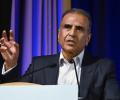
Bharti Airtel is strategically shifting its focus towards data centres, cloud services, and financial services as key drivers for its next phase of growth, leveraging significant past investments in digital infrastructure, as outlined by Chairman Sunil Mittal in the company's Annual Report for 2025-26.

Haldiram has entered into an agreement with Temasek as part of which the Singapore-headquartered global investment firm will "acquire an equity stake from the existing shareholders" of India's largest packed snack and sweets company and restaurant operator, according to a statement issued on Sunday. It did not disclose details of the deal or the valuation at which Temasek acquired the equity stake, but this is the first official confirmation of the deal from Haldiram.

Despite recent share price dips, Bharti Airtel is strategically positioned for growth, driven by investments in data centres via Nxtra, a potential tariff hike, and strong performance in Africa, alongside efforts to deleverage and expand its subscriber base in underpenetrated rural markets.

The process of merging Haldiram's Nagpur and Delhi branches to form Haldiram Snacks Food Private Ltd has been completed, informed its CEO Krishan Kumar Chutani on the social media platform LinkedIn. "A new chapter begins in the Haldiram story, and it's a significant one," Chutani posted on LinkedIn on Monday.

Eyewear retailer Lenskart plans to add 450 stores in the current financial year, its fastest expansion in three years, as the company prepares for a public listing that could value it at up to $10 billion. The addition would take Lenskart's store count to more than 3,150 across 14 countries, representing a 34 per cent rise from the 334 stores opened last year.

It is a marketplace of attention, where legacy publishers, global franchises, and consumer brands meet to make the most of India's expanding fandom economy.

Finally, some good news for the Indian startup ecosystem. After four consecutive half-year periods of declining funding since 2022, the first half (H1) of 2024 has shown an upward trend compared to the second half (H2) of 2023. According to the India Tech Semi-Annual Funding Report H1 2024 by Tracxn, Indian technology (tech) startups raised $4.1 billion in H1 2024, marking a 4 per cent increase from $3.96 billion in H2 2023.

US hedge fund Tiger Global and Japanese investment giant SoftBank have trimmed their investments in Indian start-ups by over a third - from $3.8 billion in the second half of 2021 to a mere $1.08 billion in H1 2022, according to data from Venture Intelligence. While SoftBank's investments in India dropped from $1.9 billion in H2 2021 by more than a fifth to only $0.33 billion in H1 2022, that of Tiger Global fell from $1.92 to $0.74 billion in the same period. Private equity (PE) fund trackers point out that this year most of the deals that Tiger Global has invested in are in the early stage (up to series D), and only a few are in the series E and above.

Ola Electric, the SoftBank-backed electric vehicle (EV) maker, is likely to pursue a valuation of approximately $4.5 billion in its upcoming initial public offering (IPO), marking about 18 per cent decrease from its last funding round valuation of around $5.5 billion, according to industry sources. The Bhavish Aggarwal-founded firm aims to file for the IPO by next month, according to people familiar with the matter. "The strategy is to price the IPO attractively for investors, fostering long-term growth and wealth creation," said a source.
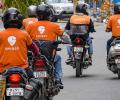
Food and grocery delivery major Swiggy on Thursday filed its updated draft papers with capital markets regulator Sebi to raise funds through its much anticipated initial public offering (IPO). The proposed IPO comprises a fresh issue of equity shares worth Rs 3,750 crore and an offer-for-sale (OFS) of 18.52 crore equity shares by existing shareholders, according to the updated draft red herring prospectus (UDRHP). Market sources have pegged the company's IPO size at over Rs 10,000 crore.

Noting that the third wave of Covid-19 has ended in India, eminent virologist Dr T Jacob John said he is "fairly confident" that no fourth wave will occur in the country unless an unexpected variant that behaves differently comes up.

India's thriving mutual fund (MF) industry is drawing interest from several firms, with multiple applications submitted to the Securities and Exchange Board of India (Sebi) for asset management company (AMC) licences.

Three marquee exits accounted for nearly 60 per cent of the total exit value -- BillDesk's acquisition by PayU for $4.7 billion, Paytm's $2.5 billion initial public offering (IPO), and Zomato's public market debut of $1.3 billion.

The Indian entrepreneurship success story will soon see one more company debuting on the public markets. Ola Electric, the electric vehicle (EV) company, has become the first such firm that has filed its draft red herring prospectus (DRHP) with the Securities and Exchange Board of India for its initial public offering (IPO). This is a fresh issue of equity shares of up to Rs 5,500 crore and an offer for sale (OFS) of more than 95 million equity shares at a face value of Rs 10.
Food delivery major Swiggy has received approval from its shareholders for a $1.25 billion initial public offering (IPO), according to filings made with the Registrar of Companies sourced by Tofler. The Bengaluru-based firm plans to raise as much as Rs 3,750 crore (around $450 million) via a fresh issue and up to Rs 6,664 crore (around $800 million) through an offer-for-sale (OFS) component, the filings stated.
The latest round of funding values the company at $10.7 billion, almost doubling it from the $5.5 billion valuation during the $1.25 billion fund raise in July 2021 when investors including SoftBank, Prosus and Accel pumped in capital in what was the company's biggest funding since its inception. The other new investors in the latest round of funding include Baron Capital Group, Sumeru Venture, IIFL AMC Late Stage Tech Fund, Kotak, Axis Growth Avenues AIF- I, Sixteenth Street Capital, Ghisallo, Smile Group and Segantii Capital, Swiggy said in a statement.

Two sectors, fintech and media & entertainment, attracted 45 per cent of total funding by value, led by large ticket deals such as CRED and Dailyhunt.

The rapid surge in cases during Delhi's fourth COVID-19 wave was mainly driven by the Delta variant, which likely has immune-evasion properties and counted for 60 per cent of the cases in April, according to a new study.

Vaccines Covishield and Covaxin work against SARS-CoV-2 variants Alpha, Beta, Gamma and Delta, while effectiveness tests against the Delta Plus variant is ongoing, the government said.

Two known Omicron sub-variants -- rather than any new variants -- have chiefly been responsible for the recent Covid-19 surge in China, according to a study of cases in Beijing published in The Lancet journal.

In a bull-case scenario it sees the Sensex at 61,000 levels, while it's bear case scenario pegs the Sensex at 41,000 levels by December 2021.

The Kraken COVID-19 variant accounts for almost 41 per cent of all Covid infections.

'Delta continues to be the dominant lineage for new cases across all parts of India in recent samples and remains the most rapidly rising lineage globally that is responsible for multiple outbreaks, including across Southeast Asia, which shows the fastest growth in new cases globally,' the INSACOG said.

The assurance comes as India's Covid graph dips -- on Friday 1,109 new coronavirus infections were reported -- and also one case of a new Covid strain in Mumbai.

A new variant of SARS-CoV-2, the virus which cause COVID-19, has been detected in South Africa and many other countries globally which could be more transmissible and evade protection provided by vaccines, according to study.

Alonso said he had huge respect for Hamilton and had no problems with him.

Companies in the small-cap universe are having a dream run - the Nifty Smallcap 100 index has shot up more than 25 per cent on a year-to-date basis, even as the benchmark Nifty is up 7 per cent. This is the best start for the index since 2017 when the Nifty Smallcap 100 index surged 32.3 per cent between January 1 and May 10. However, in terms of outperformance to the Nifty, this year's performance is the best in more than a decade. A combination of sectoral tailwinds and lack of institutional selling pressure has helped small companies escape from the correction triggered by the second wave of Covid-19.

As the Omicron strain spreads across the globe and questions on vaccine inequity dominate discussions, scientists are still scrambling to learn more about emerging variants of the deadly virus that has claimed millions of lives and crippled economies.

Private equity (PE) is set to play a bigger role in banks. Of 21 recommendations accepted by the Reserve Bank of India (RBI) out of 31 made by its Internal Working Group (IWG), its stance on non-promoter holdings in private banks is seen with excitement, though it doesn't refer to PEs explicitly. On non-promoter holdings in these banks, the RBI said this will be capped at 10 per cent of the paid-up voting equity share capital in the case "of natural persons and non-financial institutions and entities"; and "at 15 per cent for all categories of financial institutions, entities, supranational institutions, public sector undertaking, or the government." While this is a modification of the IWG's stance for the non-promoter holding in banks at up to 15 per cent, it does open up a huge window for PEs, all the same. This is because, while the RBI has remained silent on the eligibility of industrial houses for bank licences, fresh high-quality capital in large amounts can only come from PEs.

'We lost our place in being first in the epidemic, when it hit India so hard, but we were actually the epicentre of the epidemic from essentially April 2020, for almost an entire year. We had such high cases. We were the country that had the most mixed response.'

A new motivation needs to spread through the existing ranks to upskill and reskill themselves in the 55 new job roles for digital, says Ganesh Natarajan.

Indian companies seem to be trailing behind. They will have to catch up by reskilling the workforce and ramping up investments.
